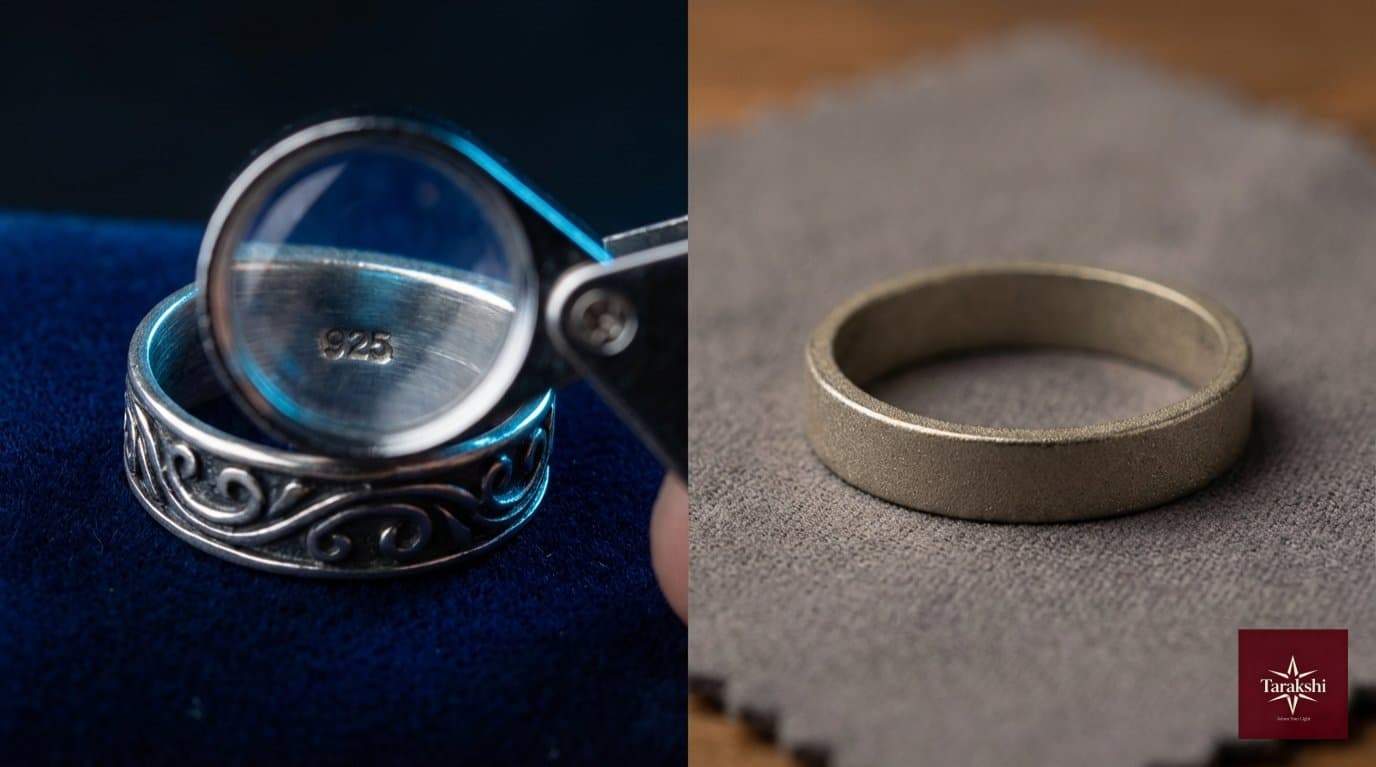
Real vs. Fake: How to Test Silver at Home
By Tarakshi Editorial Team
The Silver Confusion: Why Testing Matters
The Indian jewelry market is flooded with "German Silver" and brass pieces masquerading as real silver, costing buyers thousands in fake purchases. Unlike genuine 925 sterling silver, these alloys contain zero silver content—German Silver is actually a mix of copper, nickel, and zinc designed to mimic silver's appearance.
As silversmiths who work with certified sterling daily, we've seen countless customers discover their "silver" anklets were worthless metal. This guide teaches you 5 home tests to verify authenticity before you buy—or to check pieces you already own.
Method 1: The Hallmark Check (Most Reliable)
Authentic sterling silver jewelry sold in India must carry a BIS Hallmark stamp along with a "925" or "92.5%" marking, which are legally mandated quality certifications. Grab a magnifying glass and inspect the inner band of rings, clasp areas of necklaces, or the back of pendants.
What to look for:
- 925 or Sterling engraved clearly
- BIS Mark with a triangle and assayer's mark (on certified Indian pieces)
- Maker's Mark (our pieces carry the Tarakshi symbol)
If there's no stamp at all, or you see markings like "Silver Plated" or "German Silver," it's not real sterling silver.
Method 2: The Magnet Test (Quick & Easy)
Real silver is non-magnetic, so if your jewelry sticks to a strong magnet, it contains ferrous metals like iron or nickel and is definitively fake. Use a rare-earth neodymium magnet (available online for ₹50) for accuracy—weak fridge magnets won't work reliably.
How to perform it:
- Hold the magnet near your jewelry piece
- Observe if it pulls or sticks
- No attraction = Likely real silver
- Strong pull = Fake
Important caveat: Some fake pieces use non-magnetic metals (like brass or aluminum), so passing this test alone doesn't guarantee authenticity. Use it as a preliminary filter.
Method 3: The Ice Cube Test (Science-Based)
Silver has the highest thermal conductivity of any metal, meaning an ice cube placed on real silver will melt noticeably faster than on fake metal or your countertop. This works because silver transfers your room's heat to the ice instantaneously.
The experiment:
- Place identical ice cubes on your silver piece and a ceramic plate simultaneously
- The cube on real silver should start melting within 30 seconds
- You'll see water pooling much faster on the silver surface
This test is dramatic with larger pieces like bangles or anklets. On thin chains, the effect is subtler but still observable if you pay close attention to melt speed.
Method 4: The Sound Test (For Coins & Bangles)
When you drop real silver onto a hard wooden surface, it produces a distinct high-pitched, bell-like ring that sustains for 1-2 seconds, unlike the dull thud of brass or German Silver. This works best with solid pieces—not hollow or thin chains.
How to do it safely:
- Hold your bangle or coin 6 inches above a wooden table
- Drop it gently (don't throw)
- Listen for a clear, resonant "ping" sound
- Fake metals create a flat, muted sound
Silversmiths use this technique instantly when handling unmarked pieces in wholesale markets. It takes practice, but once you hear the difference, you'll never forget it.
Method 5: The Tarnish Test (Time-Based)
Genuine sterling silver tarnishes (turns black or yellowish) when exposed to air and humidity over weeks, while fake silver-plated items lose their coating to reveal copper or brass underneath. This isn't an instant test but a behavioral indicator.
Real silver tarnish:
- Forms a consistent dark patina across the entire surface
- Easily removes with a silver polishing cloth
- Returns to its original shine
Fake jewelry:
- Shows green or brassy discoloration (copper oxidation)
- Develops uneven flaking or peeling
- Cannot be restored to original luster
Tests We Don't Recommend
The Acid Test
While nitric acid definitively proves silver content, it permanently damages the piece by creating a dark spot, and ruins the oxidized finish on artisan jewelry like Tarakshi's vintage collections. Jewelers use this for scrap evaluation, not customer pieces.
The Bleach Test
Some online guides suggest bleach, but it's unnecessarily harsh, smells terrible, and the tarnishing reaction happens too slowly to be practical.
Why Professional Certification Beats Home Tests
Here's the truth from two decades in the industry: Home tests help identify obvious fakes, but only BIS Hallmarking and purchase from certified retailers guarantee you're getting 92.5% pure silver. Sophisticated fakes now use silver plating thick enough to pass ice tests, and some alloys mimic silver's weight.
When you buy from Tarakshi, every piece comes with:
- BIS Hallmark certification
- Lab-tested purity certificates
- Lifetime authenticity guarantee
- Transparent metal weight documentation
This eliminates guesswork entirely. Home tests should be used for:
- Verifying inherited jewelry
- Checking unmarked pieces from local markets
- Educational purposes to understand silver's properties
The Bottom Line
If you're buying new jewelry, demand hallmarked pieces and purchase from reputable brands. If you're testing existing pieces, use the magnet and ice tests as preliminary filters, then check for proper hallmarks with magnification. The combination of these methods gives you 90% confidence—but remember, nothing replaces certified authentication when significant money is involved.
Protect your investment by learning these skills, and always ask sellers for certification before purchasing silver jewelry.
Frequently Asked Questions
Does 925 silver turn black over time?
Yes, genuine 925 sterling silver naturally tarnishes (turns black/yellow) when exposed to air and sulfur. This is normal and easily reversible with polishing.
Is silver magnetic?
No, real silver is non-magnetic. If your jewelry sticks to a magnet, it contains iron, nickel, or other ferrous metals and is not pure silver.
What is German Silver?
German Silver contains zero silver—it's an alloy of copper, nickel, and zinc designed to look like silver. It's a misleading name for fake silver.
How can I tell if silver is real without damaging it?
Check for 925 or BIS hallmark stamps, perform the magnet test (real silver won't stick), and try the ice cube test (melts faster on real silver).
Why does my silver jewelry turn my skin green?
Real 925 silver rarely causes green skin. This indicates copper content from fake jewelry or low-quality alloys reacting with sweat and body chemistry.